
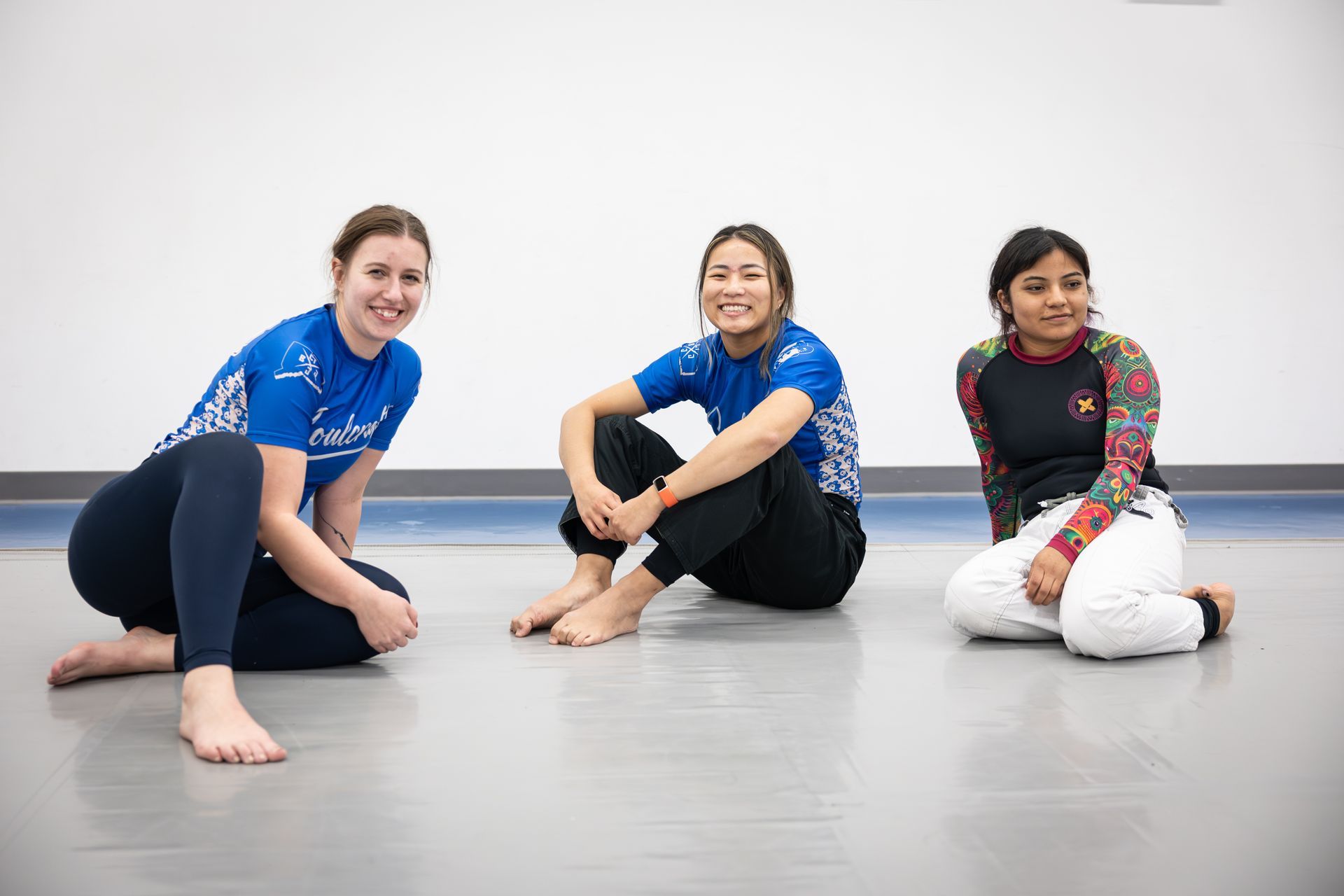
Real confidence is built the hard way: by learning skills you can actually use under pressure.
If you are searching for Adult Jiu-Jitsu in Hamden, you are probably not looking for hype. You want something real: a way to feel stronger in your body, steadier in your mind, and more capable in everyday life. We see that motivation all the time, especially from adults who have demanding jobs, busy households, or a long history of starting fitness routines and drifting away from them.
What makes Brazilian Jiu-Jitsu so different is that confidence is not a motivational speech. It is earned through repeated proof. You practice a technique, you test it with a partner, you adjust, and you try again. Over weeks and months, that cycle builds a kind of calm that sticks with you, because it is based on competence, not wishful thinking.
In our Adult Jiu-Jitsu program, we focus on steady development for real people: different ages, different fitness levels, different goals. Some students want practical self-defense skills. Some want a training outlet that keeps them consistent. Some want to compete. Many simply want to feel more like themselves again, just with better posture, better breathing, and a little more grit.
What Adult Jiu-Jitsu actually is (and why it feels so confidence-building)
Brazilian Jiu-Jitsu is a grappling martial art centered on control, leverage, and problem-solving. Instead of relying on size or explosive strength, you learn how positioning, timing, and technique can change the outcome of an exchange. That matters for confidence because it rewards learning and composure, not just brute force.
Adult Jiu-Jitsu training usually includes a blend of instruction, drilling, and live practice. The live practice part (often called rolling) is where confidence becomes real. You are not shadowboxing an imaginary opponent. You are working with a resisting partner in a controlled environment where both of you are trying to improve.
The surprising part for many beginners is that this does not have to be intimidating. When the room culture is supportive and the pace is managed well, live practice becomes a lab. You get to test what you are learning, safely, with feedback you can feel immediately.
Why you do not need to be “in shape” before you start
A lot of adults delay starting because they think they need to get fit first. We understand the instinct, but it is backwards. Adult Jiu-Jitsu is one of those activities where conditioning often shows up as a side effect of learning and consistency.
You can begin at your current fitness level. We can scale rounds, adjust intensity, and choose positions that make sense for your body and your experience. If your cardio is not great yet, that is fine. If your hips are tight from sitting at a desk, you are not alone. If your shoulders feel cranky, we can work around it. The key is showing up and letting your baseline improve.
Over time, you may notice changes that are hard to get from typical workouts:
• Better functional strength in your core, hips, and upper body
• Grip endurance and full-body coordination
• Aerobic and anaerobic conditioning from short bursts of effort
• Mobility that improves because you are moving with purpose, not just stretching randomly
Results vary, of course, and we avoid pretending there is one universal transformation timeline. But consistent training tends to make everyday movement feel easier, and that alone can change how you carry yourself.
Adult Jiu-Jitsu and the confidence of staying calm under pressure
One reason Brazilian Jiu-Jitsu in Hamden has become such a practical option for adults is that it teaches you to function while uncomfortable. That sounds dramatic, but it is really simple: someone is applying pressure, you have a problem to solve, and you learn to keep breathing.
In the beginning, many students feel a little overwhelmed during live rounds. That is normal. Your brain is processing a new environment, new rules, and new physical sensations. The confidence gain starts when you realize you can stay present anyway. You can slow down. You can frame. You can protect your neck. You can escape a bad position. Even if you do not win the exchange, you learn that you can think while tired.
That skill transfers. Work stress does not magically disappear. Family responsibilities do not get lighter. But you may notice you handle those pressures differently because you have practiced responding instead of panicking.
BJJ does not remove pressure; it teaches you how to function while pressure is present.
Progress that you can measure (and trust)
Lasting confidence needs evidence. The belt system is one form of visible progress, but it is not the only one, and honestly it is not the first thing most adults feel.
In Adult Jiu-Jitsu, the real milestones are often small and specific:
• You remember how to shrimp and recover guard without thinking too hard
• You survive a round with someone more experienced and you do not freeze
• You hit a clean escape you have been drilling for weeks
• You show up twice a week for a month, even when life is busy
• You learn to tap early and reset without taking it personally
Those moments add up. You start trusting yourself, not because you “feel confident” on a random Tuesday, but because you have a growing stack of proof that you can learn hard things and keep going.
Setbacks, submissions, and why “losing” is part of building confidence
This is one of the most underrated parts of Brazilian Jiu-Jitsu. You will get submitted sometimes. Everyone does. We still do. And if your ego has been running the show in other areas of life, that experience can be oddly clarifying.
In a healthy training culture, being submitted is not treated as a personal failure. It is information. Something about your posture, your timing, your base, or your decision-making left an opening. Great, now you have a specific problem to solve. You can ask questions. You can drill. You can try again next class.
That process builds resilience. You stop associating mistakes with “I am not good at this,” and start seeing them as “I have a next step.” It is a subtle mindset shift, but it is powerful.
And it is not just about toughness. It is about being willing to learn in public, to struggle a little, and to keep showing up anyway. That is what makes confidence durable.
Gi and No-Gi: two formats, one goal
Many adults hear about gi and no-gi and assume they have to pick a side immediately. You do not.
Gi training
Gi classes use the traditional uniform. The gi gives you handles: collars, sleeves, and pant grips. That can slow things down in a useful way and make control and escapes feel more structured.
No-Gi training
No-gi is typically done in athletic wear or grappling attire. With fewer cloth grips available, you learn to rely more on body control, underhooks, head position, and movement.
Both formats support the same big goal: becoming harder to control, better at controlling yourself, and more capable in scrambles. If you are brand new, we can guide you toward the best starting point based on your comfort level and what classes you can attend consistently.
Safety is not a side topic. It is part of confidence.
Adult Jiu-Jitsu is a contact sport. That means there is always some injury risk, and it is responsible to say that out loud. Research reviews of Brazilian Jiu-Jitsu injuries have noted that areas like the knee, ribs or chest, and shoulder are commonly affected, with beginners and men over 30 showing notable injury rates in training environments. That does not mean you should be afraid. It means you should train intelligently.
We frame safety as a skill. Knowing how to protect yourself, communicate clearly, and manage intensity is not weakness. It is maturity, and it is a big part of long-term progress.
Here are habits we coach early because they keep you training:
• Tap early and often, especially while you are learning what positions feel risky
• Release immediately when a partner taps, every time, no exceptions
• Focus on posture, framing, and safe movement before “going hard”
• Increase training volume gradually so your joints and muscles adapt
• Tell us about injuries, old surgeries, or limitations before class
• Choose controlled rounds and appropriate partners so you can learn without chaos
If you have persistent pain or a significant injury, get medical guidance. We can modify training, but we cannot diagnose or treat injuries. The win here is not being reckless. The win is learning how to train for years.
What to expect in your first class
The first class should feel welcoming and structured, not like being tossed into the deep end. While exact class flow can vary by day, most introductory Adult Jiu-Jitsu sessions follow a rhythm that makes learning manageable.
A typical first visit often includes:
1. A quick orientation to the space, basic etiquette, and how class is organized
2. A warm-up focused on movement preparation, not punishment
3. Instruction in one or two core techniques, explained step by step
4. Partner drilling at a controlled pace, with coaching and corrections
5. Optional positional practice or light rolling, based on readiness and comfort
6. Time for questions and clear next steps so you know what to do next
You do not need to “prove yourself” on day one. You are here to learn. If you are nervous, that is normal. Most people are, even if they do not admit it until later.
Common questions we hear from adults in Hamden
Am I too old to start?
Adults begin at many ages, including well into their 40s, 50s, and beyond. Training should be individualized, and we can help you choose a pace and style that fits your body and recovery.
Will I have to spar right away?
You should not feel pressured into intense sparring on your first day. We can introduce live training gradually, with controlled rounds and clear expectations.
What should I wear?
For no-gi, athletic clothing without zippers or hard parts is usually best. For gi, you will need a Jiu-Jitsu uniform. If you are unsure, check the website or contact us before your first class so you arrive comfortable and prepared.
Is it effective for self-defense?
Brazilian Jiu-Jitsu teaches valuable skills like positional control, escapes, and grappling under resistance. Real-world self-defense also involves awareness, avoidance, de-escalation, and legal considerations, so we treat BJJ as an important part of a bigger safety mindset, not a guarantee.
How often should I train?
For many beginners, twice per week is a smart starting point. It gives you repetition without beating up your recovery. You can add sessions gradually as your body adapts and your schedule allows.
Why local consistency matters in Hamden
Confidence is not built in a single great class. It is built by stacking decent classes until your baseline changes. That is where location and schedule become practical, not just convenient.
Our academy is located at 1125 Dixwell Avenue in Hamden, CT, which makes it realistic to train before work, after work, or on a steady weekly rhythm without spending half your day commuting. If you live in Hamden or nearby New Haven County communities, being close reduces friction, and less friction usually means more consistency.
And consistency is where Adult Jiu-Jitsu really does its best work. You stop overthinking. You start recognizing patterns. Your breathing improves. Your reactions get cleaner. Your confidence stops being a mood and starts being a habit.
Take the Next Step with Soulcraft Martial Arts
If you want confidence that lasts, we recommend choosing a practice that gives you honest feedback and steady progress, and Adult Jiu-Jitsu fits that perfectly. At Soulcraft Martial Arts, we keep the environment beginner-friendly, structured, and ego-free so you can focus on learning rather than “surviving” the room.
Whether your goal is fitness, self-defense, competition, or simply doing something challenging that makes you feel more capable, our Adult Jiu-Jitsu in Hamden program is built to meet you where you are and help you grow from there, one class at a time.
Build stronger fundamentals and sharpen your technique through Jiu-Jitsu training at Soulcraft Martial Arts.