
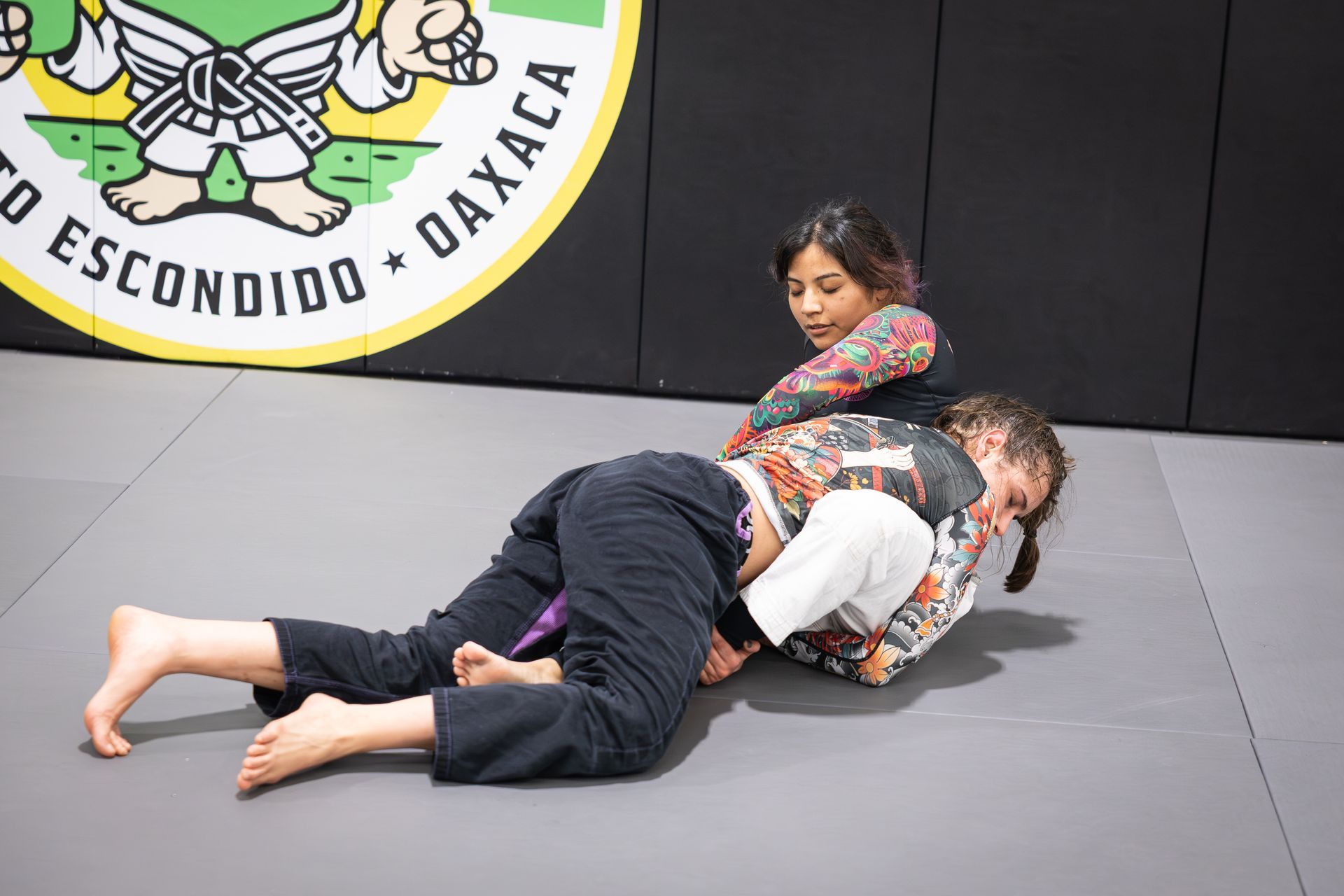
Jiu-Jitsu gives you a practical way to stay calm under pressure, and that skill has a funny way of showing up everywhere else in your life, too.
Jiu-Jitsu is sometimes described as physical problem-solving, but that phrase barely covers what it does for your mindset. In our Hamden classes, we watch adults walk in carrying the same things many of us carry: packed schedules, work stress, family responsibilities, and a brain that does not always want to quiet down at the end of the day.
What surprises most beginners is how quickly Brazilian Jiu-Jitsu starts building resilience, focus, and confidence without needing you to be “tough” on day one. You don’t have to arrive fearless or super fit. You just have to show up willing to learn, then let the process do its job.
And the process works. Research on adult BJJ participants consistently points to big mental and emotional gains: about 87.6 percent report improved confidence, 87.5 percent report reduced anxiety, and many report stronger mental flexibility and mood improvements that transfer into daily life. That’s a strong match for what we see on the mats in Hamden, especially for adults who want something real, not just another checklist workout.
Why Hamden Adults Are Turning to Jiu-Jitsu for Mental Strength
Hamden sits close to New Haven and the broader shoreline corridor, which means a lot of us live in a “go, go, go” rhythm. Commutes, deadlines, and constant notifications can leave you feeling like you’re always reacting. Training flips that pattern. On the mat, you learn to respond instead of react, and you practice it repeatedly until it becomes normal.
Adult Jiu-Jitsu in Hamden also fits the reality of busy lives. You can train a few times a week and still make meaningful progress. Even two sessions weekly can become a reliable anchor point, a place where you can breathe, sweat, and rebuild your attention span in a way that feels earned.
There’s another piece here that matters: community. In studies, 100 percent of participants reported a sense of community and respect in BJJ training environments. We take that seriously. When you’re learning something challenging, the room has to feel safe and supportive or people just won’t stick with it.
Resilience: How Jiu-Jitsu Teaches You to Keep Going (Without Forcing It)
Resilience in Brazilian Jiu-Jitsu isn’t about pretending you’re never tired or never frustrated. It’s about learning how to continue making good decisions when you are tired and frustrated. That’s different, and it’s useful.
Getting comfortable with being a beginner
In normal adult life, we avoid beginner status whenever possible. But in Jiu-Jitsu, being new is expected. You’re not “behind,” you’re just at the start. When you practice in a setting where everyone understands that, you stop taking every mistake personally. That shift alone is resilience.
You’ll tap out, reset, and try again. And then you’ll do it a hundred more times. Not because we want you to lose, but because tapping is part of learning safely. Each reset teaches your nervous system: pressure is not an emergency, it’s information.
Resilience is built through controlled adversity
The best part of sparring (rolling) is that it’s real enough to be meaningful but controlled enough to be safe. You feel what it’s like to be pinned, squeezed, or off-balance. Then you learn frames, escapes, and guard work to solve it. Over time, that experience changes how you handle stress outside the gym.
A lot of adults notice this in everyday moments: a tense meeting, an awkward conversation, a deadline that suddenly moves up. You still feel pressure, but you’re less likely to spiral. You’ve practiced pressure.
The long-game mindset, measured in months not days
Black belts score higher than white belts in mental strength, resilience, grit, self-efficacy, self-control, and life satisfaction, and those qualities track with training experience. We like that because it tells the truth about the art: this is a long-term skill, not a quick hack.
If you’re the kind of person who wants a practice you can grow into for years, Brazilian Jiu Jitsu in Hamden can be that. Your pace can be steady, realistic, and still powerful.
Focus: Why Jiu-Jitsu Is One of the Most Effective Attention Trainers We Know
Focus is not just “concentrate harder.” It’s the ability to notice what matters, ignore what doesn’t, and stay present when things get noisy. Jiu-Jitsu trains all three.
You can’t multitask your way through a roll
When you’re sparring, your attention has consequences. If your mind drifts, you’ll get swept, passed, or submitted. That immediate feedback is strangely helpful. It teaches you to come back to the present without shame, because the situation demands it.
Many adults describe this as a moving meditation. The rest of your day can be messy, but for those minutes on the mat, you’re here. Not doom-scrolling, not replaying conversations, not living in tomorrow’s to-do list.
Mental flexibility is a focus skill, too
One study found about 81.3 percent of adult participants reported enhanced mental flexibility. In practice, that means you get better at switching plans without panicking. You try an escape, it fails, you change angles. You try a guard pass, your partner counters, you flow to the next option.
That ability to adapt is the opposite of getting stuck. And once you build it physically, it’s easier to access mentally at work or at home.
The “flow state” effect
You’ll hear people talk about flow in sports. In Jiu-Jitsu, flow is common because the task is challenging and immediate. You’re solving a real-time puzzle with your whole body. For many adults, that becomes the most reliable way to shut off mental chatter, which is one reason anxiety tends to drop with consistent training.
Confidence: The Quiet Kind That Comes From Proof
Confidence can mean a lot of things. In our experience, the confidence that lasts is the kind you can point to. It comes from proof: you learned something hard, you practiced it, and you can do it under pressure.
Research backs this up. Around 87.6 percent of adult BJJ participants report increased confidence. That number makes sense because Jiu-Jitsu gives you measurable wins early, even as a beginner.
You build competence in small, stackable steps
Your first month might be learning how to fall safely, how to shrimp, how to frame, and how to tap. That’s not flashy, but it’s real competence. Then you learn a couple of escapes that actually work. You learn how to control posture, how to keep yourself safer, how to breathe.
Those pieces stack. And when they stack, you start walking a little differently, in a grounded way, not in a puffed-up way.
Confidence without aggression
We care a lot about this: Jiu-Jitsu is not about bullying people or proving something. It’s about capability and control. When you know you can handle yourself, you don’t need to perform toughness. You can be calm.
That calm shows up in places you might not expect, like setting boundaries, speaking up in a meeting, or simply not overreacting when someone else is tense.
The Physiology Behind the Mindset: What Training Does to Your Body and Brain
Mental toughness is not only a mindset issue. It’s also physiology. Training changes your baseline.
Brazilian Jiu-Jitsu improves cardiovascular health, strength, endurance, flexibility, and mobility. Those physical changes support mental benefits like stress reduction and mood improvement. Many participants report better mood (around 96.9 percent in one study), which aligns with what we see when adults train consistently.
Here’s what’s going on under the hood:
• Breath control under effort: You learn to breathe through difficult positions, which downshifts panic.
• Endorphins and stress regulation: Hard training changes how your body processes stress signals.
• Better sleep: Many adults sleep deeper when training becomes routine, and sleep makes everything easier.
• Improved posture and mobility: Feeling better in your body makes it easier to feel confident in your life.
For adults over 40, the trend is moving toward holistic benefits too: better circulation, improved mobility, and a sense of staying sharp mentally. We build classes with that in mind, because longevity matters.
What a Typical Adult Class Feels Like (And Why It Works)
If you’re new, it’s normal to wonder what you’re walking into. Our classes are structured so you can learn without feeling thrown into chaos.
Most sessions include a warm-up that builds movement skills, a technical portion where we teach specific positions and concepts, and then live training where you apply what you learned with a partner. We coach you through intensity choices so you’re not forced to go “all out” to belong here.
The room usually sounds like a mix of careful coaching, occasional laughter, and the soft thump of people drilling. It’s focused, but not stiff. You’ll work hard, but you’ll also be learning the whole time.
Beginner Worries We Hear All the Time (And How We Handle Them)
Adults are practical. You want to know what you’re getting into before you commit time and energy. Here are the concerns we hear most, and how we approach them.
“Do I need to get in shape first?”
No. Jiu-Jitsu is how you get in shape, and it meets you where you are. We’d rather help you build fitness through skill-based training than have you delay for months trying to “prepare” for preparation.
“Am I too old for this?”
We train adults across a wide range of ages. The goal is progress, not punishment. We emphasize technique, smart pacing, and a training culture where your long-term health matters. If you’re looking for Adult Jiu-Jitsu in Hamden that fits real life, this is exactly what the art is good at.
“Is it safe?”
Any contact sport has risk, but we reduce it with coaching, controlled intensity, tapping early, and partner respect. We also teach you how to train, which sounds obvious, but it’s a real skill. Safety is a shared responsibility, and we build that into the culture.
“What if I feel awkward?”
You will. Everyone does at first. Then it fades faster than you expect because the learning is structured, and because the room is full of people who remember being new.
How to Get the Most Out of Your First Month
Consistency beats intensity, especially early. If you want a simple plan that works, here’s what we recommend to most beginners:
1. Train 2 to 3 times per week so your body and brain can retain patterns.
2. Focus on defense first, including posture, frames, and escapes.
3. Ask one question per class instead of trying to remember everything.
4. Keep your sparring intensity controlled so you can learn without burning out.
5. Track small wins like surviving longer, escaping once, or staying calm.
This is where resilience, focus, and confidence start becoming real, because you’re building skills you can repeat on demand.
Jiu-Jitsu for Hamden Professionals, Parents, and Commuters
A lot of our adult students are balancing full schedules. That’s normal here. For Hamden commuters and professionals, Jiu-Jitsu can be a kind of reset button. You get a challenging hour that pulls you out of your head and into your body, then you leave feeling clearer than when you walked in.
For parents, the benefits can be even more practical. Training can be a protected slice of time where you’re not needed by anyone else. That’s not selfish. It’s maintenance. And the patience you build on the mat, especially in frustrating positions, tends to translate into calmer decision-making at home.
Brazilian Jiu Jitsu in Hamden as Practical Self-Defense (Without Paranoia)
Self-defense is part of why many adults start training, and it’s a legitimate reason. Jiu-Jitsu is especially known for leverage, control, and the ability to manage distance and pressure in close ranges.
We teach self-defense principles through positional control, escapes, and awareness, while keeping the tone realistic. You don’t need to be fearful to take your safety seriously. Training gives you options, and options create confidence.
The Role of Community in Resilience and Confidence
One of the most overlooked benefits of training is belonging to something consistent. Studies show a strong sense of community and respect in BJJ environments, and we see how that supports mental health. When you know you’ll see familiar faces and coaches who care about your progress, it’s easier to stay consistent.
Consistency is where the transformation happens. Not overnight, not in a single heroic workout, but through showing up when you’re tired, and leaving glad you did.
Take the Next Step
Building resilience, focus, and confidence is not a mystery, but it does require a method you can actually stick with. That’s what we aim to provide every day: clear coaching, safe training, and a community that makes hard work feel doable.
If you want Brazilian Jiu-Jitsu that fits real adult life in Hamden, we’d love to help you get started at Soulcraft Martial Arts, whether your goal is stress relief, self-defense, fitness, or simply proving to yourself that you can learn something challenging and keep going.
Strengthen both your body and mindset by joining a Jiu-Jitsu class at Soulcraft Martial Arts.