
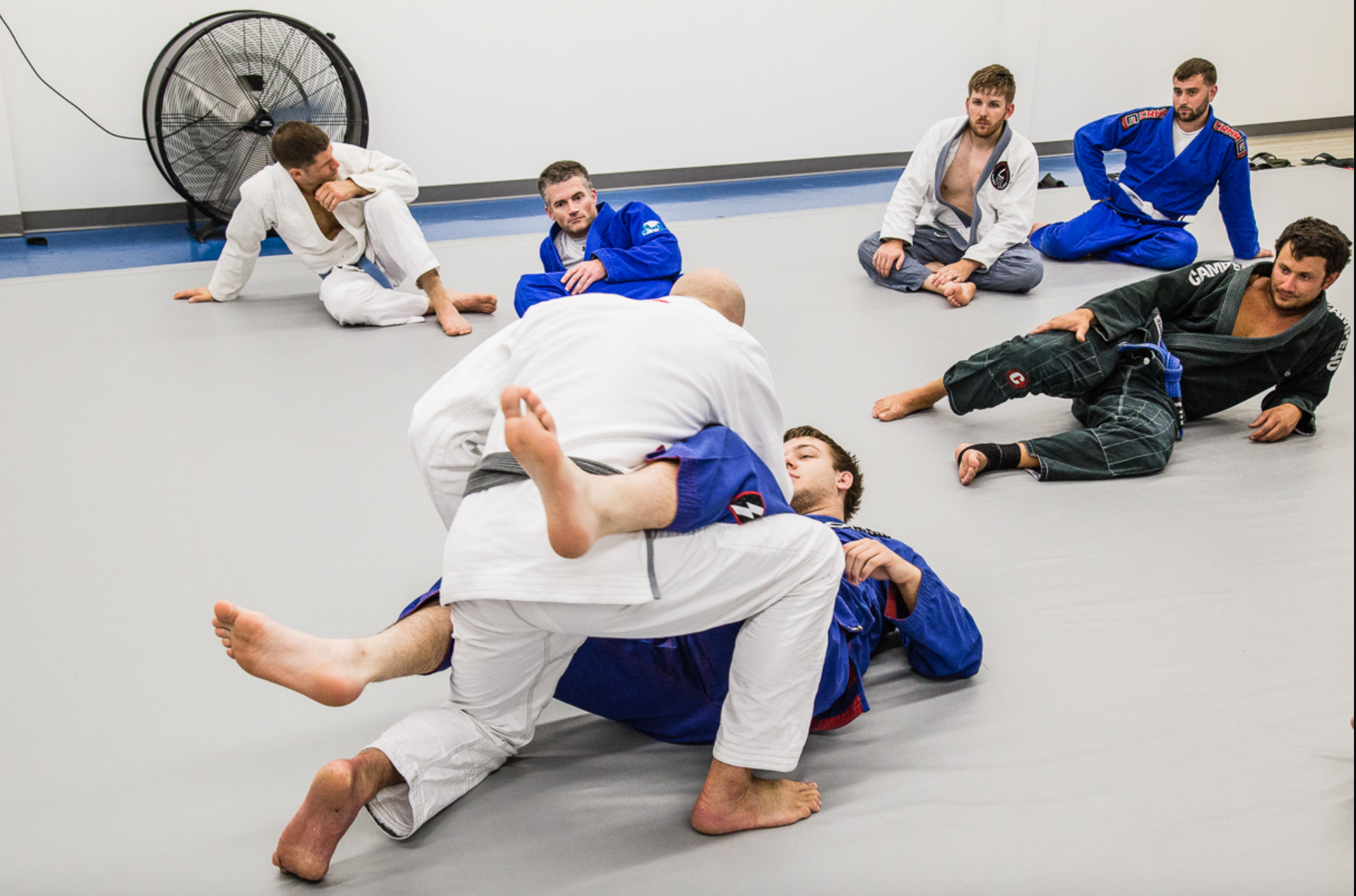
Jiu-Jitsu is where calm thinking and real strength meet, one round at a time.
If you are looking for a training routine that does more than make you tired, Jiu-Jitsu has a way of surprising people. You come in expecting a workout, but you leave with something else too: clearer attention, steadier decision-making, and a kind of strength that shows up on regular days, not just on the mats.
In our Hamden classes, we treat focus as a skill you can practice, not a personality trait you either have or do not. We build it through technical reps, patient coaching, and live training that asks you to stay present under pressure. That is where mindful strength comes from: not from forcing it, but from training it consistently.
This article breaks down how our approach to Brazilian Jiu Jitsu in Hamden supports physical conditioning, mental clarity, and the everyday focus that helps you handle work, family, and stress without feeling scattered.
Why Jiu-Jitsu builds mindful strength (and not just muscle)
Mindful strength is the ability to stay composed while your body is working hard and the situation is changing quickly. Jiu-Jitsu teaches that by design. Positions shift, balance changes, grips break, and you have to respond without panicking. Over time, you learn to breathe, observe, and choose the next best action instead of reacting on impulse.
We coach you to slow your mind down even while your body speeds up. A simple example is escaping from the bottom of a pin. If you rush, you burn energy and give openings away. If you frame, angle your hips, and connect steps in the right order, you get out with less strain. That is mindful strength: technique plus awareness.
The bonus is that this mental skill transfers. The same calm, step-by-step thinking you use in a tight position is the same thinking you use when a workday goes sideways or you are juggling too many tasks at once.
Everyday focus is trained in small moments, not big speeches
Focus is not a motivational poster. It is the ability to stay with what is happening right now. In Jiu-Jitsu, right now is always changing, which forces your attention to stay honest. If your mind wanders, you feel it immediately in your timing.
We build focus in three practical ways during class:
Clear goals for each round
Instead of telling you to “go harder,” we guide you toward specific objectives: keep your elbows tight, win inside position, or recover guard with a clean hip escape. When your goal is concrete, your attention has something to hold onto.
Immediate feedback through movement
Jiu-Jitsu gives you real-time feedback. If your base is off, you get swept. If your posture breaks, you get pulled into a submission threat. That is not punishment, it is information. Your body learns what “focused” feels like.
Breath and pace awareness
We cue breathing and pacing because adrenaline can make people rush. Learning to manage your pace is part of building everyday focus. You start noticing when you are holding your breath in a stressful spot, and then you start noticing that pattern elsewhere too.
What you actually do in class, and why it works
People sometimes picture Jiu-Jitsu as nonstop sparring, but good training is progressive. We use structure so you can learn safely and retain what you practice.
Technique first, then pressure in layers
We typically start with a technical lesson: a position, an escape, a control, or a submission chain. After that, we add resistance gradually through drilling and positional rounds. This matters because learning under chaos is hard at first. Learning in layers helps you build confidence without guessing.
You learn to solve problems, not memorize moves
A big part of Brazilian Jiu Jitsu in Hamden is understanding why a technique works. Where is your weight? Which angle removes their power? What grip controls the hip? When you grasp those ideas, you stop feeling like you need a thousand moves. You need a few reliable tools and the ability to apply them.
Live training that stays constructive
Sparring and positional rounds are where you pressure-test skills, but we keep the environment welcoming and free of ego. Beginners need room to learn, and advanced students still need clean reps. We aim for training that is challenging without being chaotic.
Mindful strength in the body: posture, joints, and usable conditioning
Jiu-Jitsu is a full-body practice, but it does not reward mindless intensity. You build conditioning through repeated effort, yes, but the best gains come from learning efficient movement.
Here are a few physical adaptations many students notice over time:
• Stronger posture and trunk control from maintaining frames, base, and alignment under pressure
• Better hip mobility and coordination from guard work, transitions, and escapes
• Grip and pulling endurance from controlling sleeves, wrists, collars, and head position
• More balanced strength because you use pushing, pulling, rotation, and isometric holds
• Improved recovery because you learn to manage effort instead of redlining every round
You might still get tired, of course. But you start getting tired in a smarter way, and that difference matters.
How Adult Jiu-Jitsu in Hamden supports stress management
Stress is not just “in your head.” It is physical: breathing changes, shoulders rise, jaw clenches, and your attention narrows. Jiu-Jitsu gives you a safe way to experience intensity and practice staying functional inside it.
We see this especially in Adult Jiu-Jitsu in Hamden because life stress is real for adults. Work deadlines, commuting, family responsibilities, and the general noise of daily life can make you feel like your brain never powers down. Training gives you a place to focus on one thing at a time, with clear rules and real feedback.
A strange but helpful effect happens: when you train regularly, everyday annoyances often feel less urgent. Not because you stop caring, but because you get better at responding instead of spiraling.
A simple mental model we teach: position before submission
If you want a mindset that builds focus fast, this is it. In Jiu-Jitsu, chasing submissions without control usually backfires. We coach you to earn position first, then work toward finishes with patience.
That approach carries into daily life more than people expect. You start asking:
What is the stable position here?
What do I control right now?
What is the next small step?
That is mindful strength again. It is not flashy, but it is dependable.
Getting started without feeling overwhelmed
Most people do not quit because training is hard. People quit because they feel lost. We prevent that by keeping your first steps clear and practical.
Here is what we recommend if you are new to Jiu-Jitsu:
1. Show up focused on learning, not on performing or proving anything
2. Ask questions when something feels confusing, because confusion is part of skill-building
3. Aim for consistency over intensity, even if you can only train a couple times a week
4. Track one small win per class, like remembering a frame or improving your posture
5. Give yourself a real runway, because the first month is about comfort and orientation
You will not learn everything at once, and you do not need to. You just need the next piece.
Membership options and what to expect from us
We keep membership straightforward so you can choose what fits your life and your budget. Our Brazilian Jiu Jitsu program has been offered at $150 per month with a 6-month contract, and $140 per month with a yearly contract. If you are the kind of person who likes consistency, longer commitments can make sense. If you are still building the habit, we can talk through what feels realistic.
Beyond Jiu-Jitsu, we also offer Krav Maga and Muay Thai, which gives you options if you want to round out your training. Some students like to cross-train for conditioning and striking awareness while keeping Jiu-Jitsu as the core practice.
To plan your week, the class schedule page on the website is the best place to see current times and map out a routine you can actually stick to.
Why our culture matters for focus and progress
Technique is important, but the environment you train in shapes how quickly you learn. We run classes with a friendly, welcoming tone that stays free of ego. That is not a slogan. It is a practical choice.
When the room feels safe to learn, you take more useful risks. You try the escape you just learned. You ask the question you were hesitant to ask. You tap early and reset instead of forcing something. That is how adults improve without burning out.
We also see strong community bonds form naturally. People train together week after week, and those relationships make consistency easier. On days you feel tired or distracted, it helps to know you will see familiar faces and get solid coaching.
How Jiu-Jitsu shows up off the mats in Hamden
The benefits we care about most are the ones you notice on a random Tuesday. You stand up straighter. You breathe more evenly in tense conversations. You feel less thrown off when plans change. Your focus lasts longer, and you waste less energy on noise.
Jiu-Jitsu does not remove stress from your life. It gives you a way to practice handling it. That is a big difference, and it is one of the main reasons adults stay with training for years.
Take the Next Step
Building mindful strength is not about being tough all the time. It is about learning how to stay present when things get uncomfortable and choosing skill over panic. That is what we train for every day, and it is why Jiu-Jitsu stays valuable long after the beginner phase ends.
If you want a supportive place to start and a clear path to progress, we would love to train with you at Soulcraft Martial Arts here in Hamden. Soulcraft Martial Arts is set up for real people with real schedules, and we keep the training practical, patient, and challenging in the right ways.
Continue your Jiu-Jitsu education beyond this article by joining a class at Soulcraft Martial Arts.