
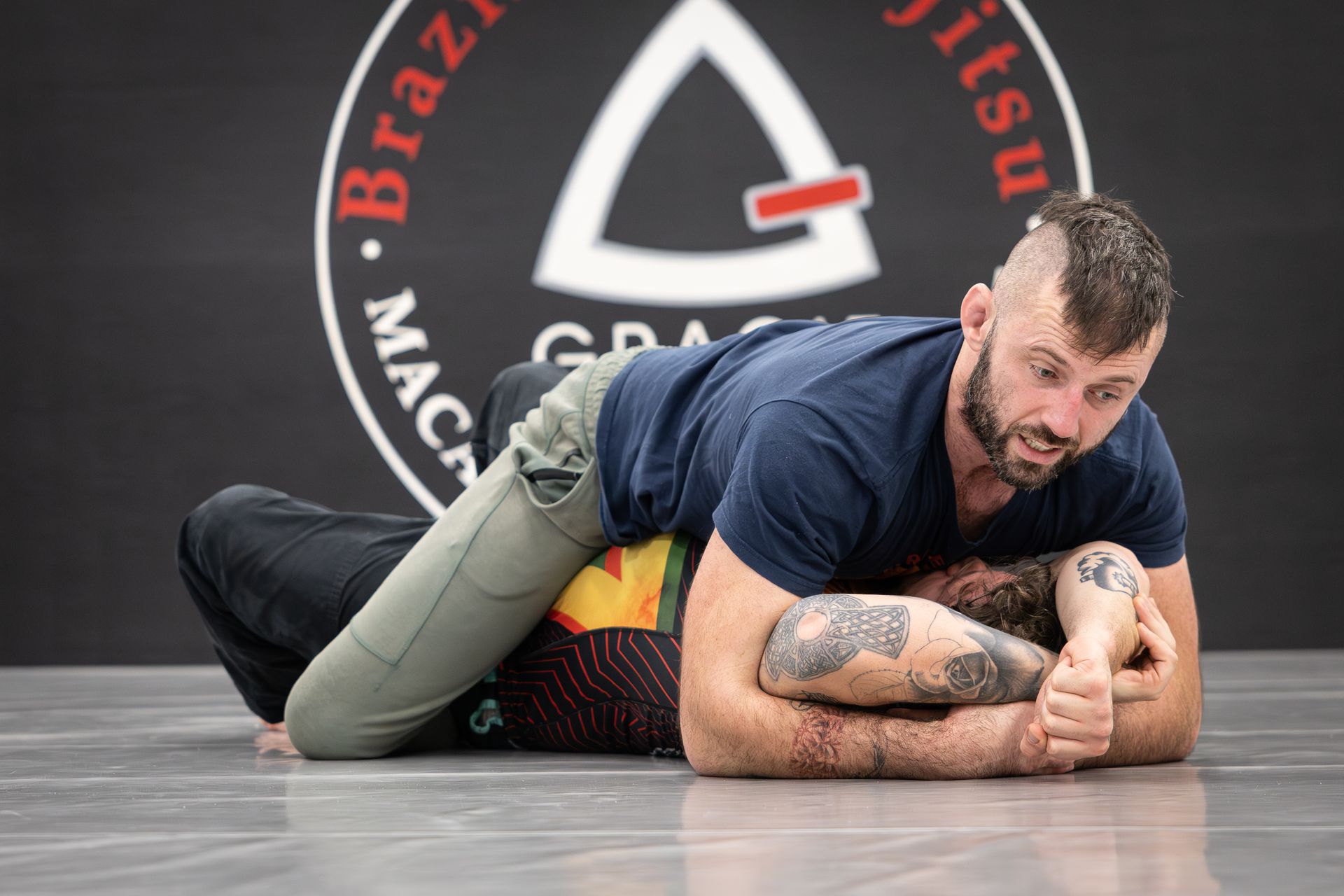
Jiu-Jitsu fundamentals turn simple movements into real-life strength you can feel in your posture, your balance, and your day.
If you have ever wanted to feel stronger without living in the weight room, Jiu-Jitsu is a surprisingly practical place to start. The first things we teach are not flashy submissions or complicated sequences. We focus on the basics that help your body move better and your mind stay calmer when things get uncomfortable.
For adults in Hamden, that matters. Busy schedules, stiff hips from desk time, and the general stress of modern life all add up. Our approach keeps the learning process structured and beginner-friendly so you can build strength and confidence step by step, not by getting tossed into chaos on day one.
What makes fundamentals powerful is that you can measure progress quickly. When you learn how to fall safely, create space with frames, and move your hips efficiently, your body starts cooperating in everyday situations too, like carrying groceries, getting up off the floor, or even just standing taller.
Why fundamentals matter more than “advanced” moves
Most people hear Brazilian Jiu-Jitsu and picture endless sparring or super athletic training. In reality, fundamentals are what make the art safe, effective, and sustainable, especially for adults. We teach you to rely on alignment and leverage, not brute force, because that is how your training translates to real life.
Fundamentals also reduce injury risk. When you understand how to place your hands, elbows, and hips, you stop “reaching” with your joints and start moving as a connected unit. That is the difference between feeling wrecked after class and feeling like you did something challenging but healthy.
Confidence grows from clarity. Instead of wondering what to do from bad positions, you start recognizing them and using simple, repeatable tools. When you can escape a tight side control or recover guard with good timing, you feel that competence in your bones.
The first safety skills we teach in Jiu-Jitsu
Safety is not a side note in our beginner classes. It is the foundation. Adults do best when training is progressive and predictable, and we take that seriously.
Ukemi: learning how to fall without panic
Safe falling, often called ukemi, is one of those skills that helps far beyond the mat. We teach you how to distribute impact, protect your head, and keep your body organized as you land. It is practical, and it also reduces anxiety, because falling stops feeling like an emergency.
Tapping early: the real sign of control
A lot of beginners hesitate to tap because they think it means losing. We teach the opposite. Tapping early is how you stay healthy and keep training. It is also how you learn faster, because you can reset, ask questions, and try again instead of getting stuck in stubbornness.
Framing: creating space instead of fighting strength with strength
Framing is one of the most important fundamentals in Jiu-Jitsu. It is how you use your forearms and structure to make space, protect your neck, and stop pressure from collapsing you. Once you learn frames, you realize you can breathe and think even when someone is on top of you.
Building everyday strength through core movements
Functional strength is the kind you feel when you lift, carry, twist, and stabilize in real life. Jiu-Jitsu develops that strength through repeated, full-body movements that demand posture, hip stability, and core engagement.
Shrimping and bridging: hips that actually work
Hip movement is a major theme in our fundamentals curriculum. Shrimping teaches you to slide your hips away and create space. Bridging teaches you to drive through your feet and lift with your hips while keeping your spine strong.
These movements look simple. Then you do them for rounds with good form and you understand why they matter. Over time, your hips get more mobile, your core gets more responsive, and your ability to move under pressure improves.
Posture: the quiet strength that changes your day
Posture in Jiu-Jitsu is not about standing up straight like a statue. It is about stacking your spine, using your hips, and keeping your base stable. When posture becomes a habit, daily tasks feel easier. You stop collapsing into your lower back when you lift something. You stop craning your neck forward when you get tired.
Breathing under fatigue: the confidence multiplier
One of the most underrated skills we build is breathing under fatigue. You learn to stay relaxed when your heart rate rises. You learn to exhale during effort. You learn to recover while still moving. This is a confidence boost because it shows you that discomfort is manageable.
Positional control: where confidence becomes real
Fundamentals are not just drills. We want you to understand positions and how to survive them. A big part of Adult Jiu-Jitsu in Hamden is learning positional goals: where you are safe, where you are at risk, and what you should prioritize.
Escaping side control
Side control can feel suffocating for a new student. We break it down into frames, hip movement, and timing. You learn to protect your neck and arms, create a wedge with your forearms, then use your hips to recover space. The first time you escape cleanly, it is hard not to smile a little.
Holding mount with balance, not squeezing
Mount is a dominant position, but beginners often try to “hold” it by tensing everything. We coach balance and pressure distribution instead. You learn where your weight should go, how your knees and feet work, and how to stay heavy without being reckless.
Guard recovery and retention basics
Guard is not just a defensive shell. It is a framework for controlling distance. In fundamentals, we focus on recovering guard when it is slipping away and keeping your hips between you and your partner. This builds coordination and core strength fast.
What a beginner-friendly month can look like
Adults learn best with structure, and we organize our fundamentals to make progress predictable. You will still be challenged, but you will not be guessing what the plan is.
1. Week 1: Safety basics like ukemi, tapping early, and how to move with a partner responsibly
2. Week 2: Core movements like shrimping, bridging, technical stand-ups, and framing patterns
3. Week 3: Positional rounds focused on escapes and control, using limited goals to reduce overwhelm
4. Week 4: Matched, controlled sparring where you connect the dots without “anything goes” chaos
This kind of progression is especially helpful if you are juggling work, family, and recovery. You can show up, learn the theme, repeat it enough to remember it, and feel yourself getting sharper.
What you actually gain from Brazilian Jiu Jitsu in Hamden
Most adults start for a simple reason: they want to feel better in their body and steadier in their mind. The benefits are real, and they compound over time.
Here are a few changes we commonly see as students build consistency:
- Stronger posture and core control that shows up when you lift, carry, and sit for long stretches
- Better balance and coordination from partner drills that require timing and body awareness
- A calmer stress response, because you practice thinking while your heart rate is elevated
- Practical self-defense skills like escapes, grips, and takedown awareness that build real confidence
- A sense of progress that is measurable, like lasting longer in rounds while staying relaxed and technical
None of this requires you to be “in shape” first. Getting in shape can be part of the process. Some days you will feel smooth, some days clumsy, and that is normal. The point is that you keep learning.
Addressing common concerns adults have before starting
Is Jiu-Jitsu safe for beginners?
Yes, when it is taught with fundamentals-first priorities. We match partners thoughtfully, coach tapping early, and build skills like framing and falling so you can train with confidence. You are not expected to tough it out through confusion or pain.
Will I be the only new person?
New students join regularly, and our class environment is built to support that. We keep instruction clear and we encourage questions. If something does not make sense, we would rather you ask than guess.
What if I am not flexible or athletic?
Flexibility helps, but it is not the entry requirement. Jiu-Jitsu rewards timing, posture, and leverage. Many adults feel stiffness at first and then notice their hips and shoulders open up over time, almost without trying.
How often should I train?
Consistency matters more than intensity. Even two classes a week can create noticeable change in strength, coordination, and confidence. We can help you pick a rhythm that fits your schedule and recovery.
Small fundamentals that make a big difference outside the gym
One of the best parts of training is realizing the skills are not trapped on the mat. Jiu-Jitsu teaches you to solve problems with composure, and that mindset carries.
You learn to get comfortable being uncomfortable in a safe environment. You learn to slow down, find structure, and make one good decision at a time. It sounds simple, but it changes how you handle stressful moments at work, at home, or even in traffic on a long day in Hamden.
You also build “everyday durability.” Getting up from the floor becomes easier. Your grip feels stronger. Your hips and core feel more reliable. The training is physical, yes, but it is also practical in a way most workouts are not.
Ready to Begin at Soulcraft Martial Arts
Training works best when the basics are taught with intention, and that is exactly how we run Jiu-Jitsu at Soulcraft Martial Arts. Our goal is to help you build real-world strength, safer movement habits, and confidence that holds up under pressure, not just techniques you forget the next day.
If you are looking for Brazilian Jiu Jitsu in Hamden that respects adult bodies, busy schedules, and the need for steady progress, we are ready when you are, and we will guide you through the fundamentals one step at a time.
Develop consistency and elevate your training by joining a Jiu-Jitsu class at Soulcraft Martial Arts.