
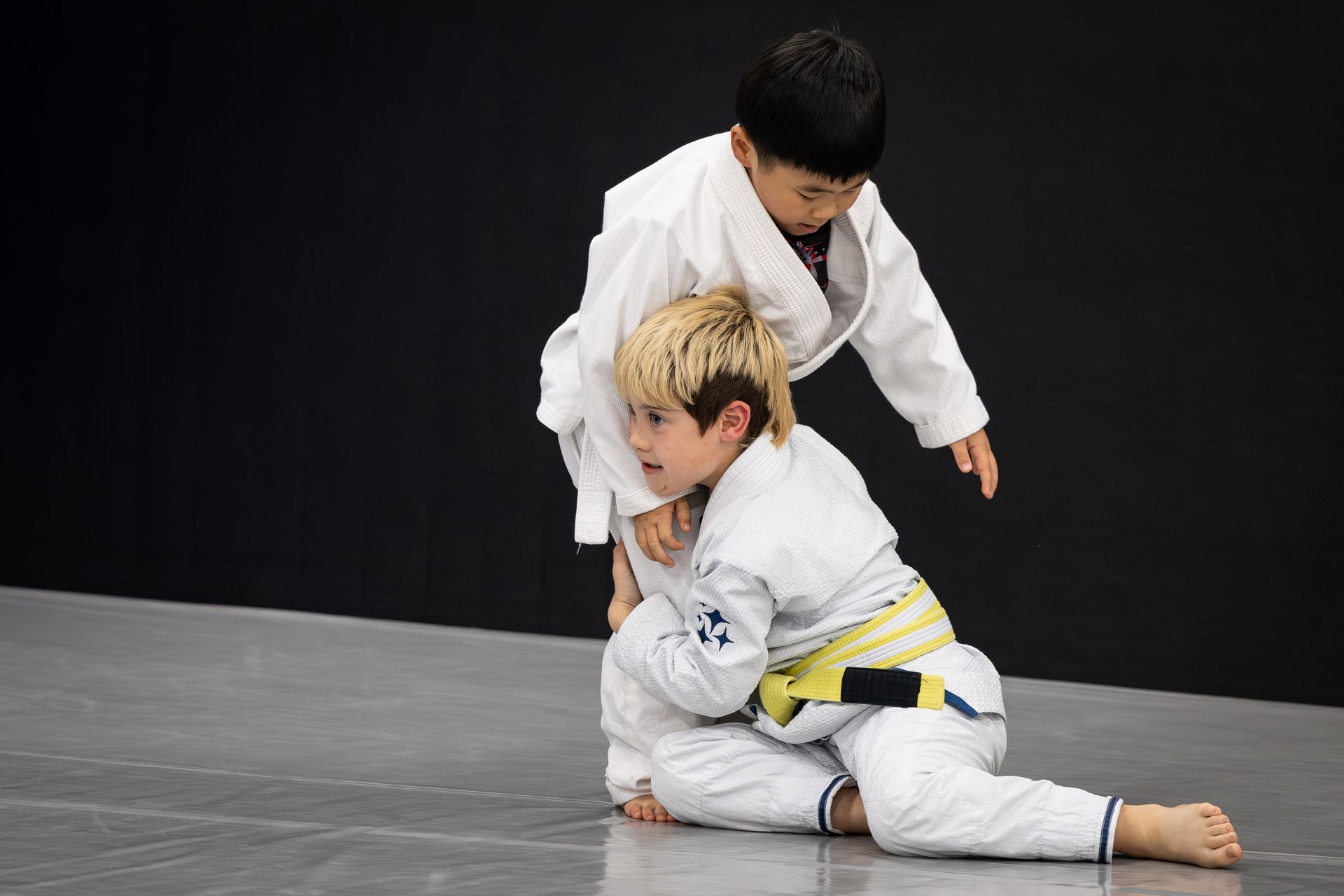
Youth Jiu-Jitsu gives kids a place to practice attention and teamwork in real time, with real partners, every single class.
When parents ask us whether Youth Jiu-Jitsu can help with focus, we like the honesty behind the question: you want something that actually transfers into school, chores, and daily routines, not just an activity that burns energy for an hour. The good news is that focus is built into the structure of Brazilian Jiu-Jitsu. Kids have to listen, watch, remember sequences, and problem-solve under gentle pressure.
At the same time, Youth Jiu-Jitsu is one of the most social “non-team-sport” activities we can offer. Your child trains with partners, rotates through drills, learns to communicate clearly, and practices respect in a way that feels natural. For families looking at Youth Jiu-Jitsu in Hamden as an after-school routine, the focus and friendship benefits often end up being the real win.
Why Youth Jiu-Jitsu builds focus differently than most activities
A lot of kids can pay attention when something is brand-new or exciting. The harder skill is sustained attention: staying engaged through repetition, details, and small corrections. Youth Jiu-Jitsu teaches that kind of focus because the techniques are specific, and small changes matter. Hand placement matters. Posture matters. Where your hips are matters. That attention to detail is not optional if you want things to work.
In class, we coach kids to notice what’s happening, not just power through. That might sound simple, but it’s a major shift for many students. Instead of “go faster,” we often ask for “go cleaner.” Over time, kids start to connect the dots: careful practice leads to real improvement.
Another reason focus improves is that BJJ is interactive. Your child is not staring at a coach for the whole class, trying not to wiggle. Kids learn by doing, and doing requires attention. Even energetic students often settle in because there’s a job to do, a partner to help, and a clear start and stop to every drill.
The hidden focus skill: following multi-step directions
In Youth Jiu-Jitsu, kids constantly practice multi-step instructions: step here, grip there, move your knee, turn your hips, finish with control. When a child misses step two, the technique falls apart, and that feedback is immediate. It’s not a lecture, it’s a “try again and feel the difference.”
This is one reason parents often notice better follow-through at home. When a child gets used to completing sequences on the mat, “put your shoes away, hang your backpack, then wash your hands” starts to feel more doable. It’s the same brain muscle.
How a typical class trains attention, patience, and self-control
Focus is not one thing. It’s a bundle of small behaviors: listening, waiting your turn, keeping your hands to yourself, handling frustration, and staying with a task even when it’s tricky. Youth Jiu-Jitsu gives kids repeated practice with all of that, in a structured environment.
Here is what that looks like in real time during class:
1. We start with clear expectations and a warm-up that channels energy into coordinated movement.
2. We teach a small set of techniques, usually with a theme, so kids can connect ideas instead of collecting random moves.
3. Kids drill with a partner, which forces attention to spacing, timing, and safety.
4. We coach corrections in short, usable bites so kids can apply feedback immediately.
5. We finish with supervised games or controlled sparring appropriate for age and experience, where kids practice decision-making under pressure.
That structure matters. Kids thrive when the rules are consistent and fair, and when the training environment is predictable enough to feel safe but challenging enough to stay interesting.
Focus under pressure without the “panic” factor
Brazilian Jiu-Jitsu in Hamden appeals to many families because it teaches calm problem-solving. When a child is lightly stuck in a position, the goal is not to freak out or force it. The goal is to breathe, frame, move, and work step by step. That habit can carry into school moments: a hard math question, a social bump at recess, a big test.
We also teach kids to reset quickly. If something does not work, we do not treat it like failure. We treat it like information. That mindset is a quiet superpower for focus.
The friendship side: why partner training makes connection feel natural
If you want your child to make friends, you usually need two ingredients: consistent exposure to the same peers and a shared task that makes interaction easy. Youth Jiu-Jitsu has both. Kids rotate partners, learn names, and work together toward small goals like “let’s get this drill smooth” or “let’s remember the steps.”
What makes this especially helpful is that friendships form through doing, not through forced conversation. A shy child does not have to walk into class and be “social” on demand. Interaction grows naturally because the training requires cooperation: holding pads, taking turns, drilling safely, and giving a partner space to learn.
And yes, kids laugh in class. Not constantly, but enough. When a technique looks awkward at first, it’s normal to get the giggles, then settle back in. That shared experience builds comfort fast.
Social skills Youth Jiu-Jitsu practices every week
Youth Jiu-Jitsu in Hamden is social in a very practical way. Kids repeatedly practice the kinds of behaviors that make friendships work in the real world:
• Taking turns and sharing space on a busy mat without arguing over “my spot”
• Using clear, respectful communication with partners of different personalities
• Learning to win and lose with good sportsmanship, then getting back to work
• Helping a partner improve, not just trying to “beat” a classmate
• Making quick repairs after small conflicts, like a bump, a misunderstanding, or a tough round
These are not abstract values. They are skills that get rehearsed every class. Over time, many kids become more comfortable speaking up, asking questions, and participating in group settings.
A Hamden parent reality: school demands, screen time, and the need for structure
Hamden families juggle a lot. School days are packed, homework can stretch longer than anyone wants, and screens are always right there, offering easy entertainment. We are not anti-screen, but we are realistic: kids need structured, in-person experiences where attention and social skills are practiced, not just talked about.
Youth Jiu-Jitsu gives you a healthy routine that anchors the week. It’s not just exercise. It’s scheduled practice in listening, patience, and respectful interaction. For many families, the best part is how consistent the expectations are. Kids know what class looks like, what behavior is expected, and what progress feels like.
That consistency also helps with confidence. When a child learns a technique, earns a stripe, or simply realizes “I handled that tough situation and stayed calm,” confidence becomes earned, not hyped up. And earned confidence tends to show up at school and at home.
What kids learn in the first few months of Youth Jiu-Jitsu
Parents sometimes expect dramatic changes overnight. What we typically see is more gradual, but more real. In the first few weeks, your child is mostly learning how class works: lining up, listening to cues, partnering up, and moving safely.
Then the real development starts stacking up. Over the next couple of months, many kids begin to:
• Remember sequences with less prompting
• Accept coaching without taking it personally
• Stay calmer when something is hard
• Show more patience while waiting for a turn
• Talk to teammates more easily, especially during partner drills
This is where Youth Jiu-Jitsu really shines. The sport rewards steady effort. Kids do not need to be the fastest, loudest, or most athletic to succeed. They need consistency, attention, and a willingness to learn.
For energetic kids: focus through movement
Some kids struggle to focus when the expectation is “sit still.” BJJ gives those kids a different route. We give them movement with rules, which is exactly what many energetic students need. They can be active, but they still have to control their bodies, follow instructions, and treat partners with care.
In other words, we do not try to remove energy. We teach kids how to steer it.
For shy kids: connection without pressure
Shy students often do well in Youth Jiu-Jitsu because the social structure is built in. Partners rotate, drills create a clear reason to interact, and kids do not have to invent conversation topics. Over time, “Can you help me with this grip?” becomes a comfortable form of social entry, and friendships grow from there.
Safety and supervision: what parents should know
“Is this safe?” is a fair question. Brazilian Jiu-Jitsu is a contact sport, and we take that seriously. Safety starts with age-appropriate coaching, clear rules, and supervision that keeps intensity at the right level.
In our kids program, we focus on control, respect, and tapping early. We also choose training activities that match a child’s maturity and experience. Drilling is controlled. Sparring is supervised and introduced progressively. If a student is brand-new, we emphasize learning positions and movement before anything gets competitive.
We also teach kids how to be good partners. That includes awareness, gentle pressure, and stopping immediately when told. Those habits protect everyone on the mat, and they also reinforce empathy and responsibility.
Parent FAQs for getting started in Hamden
What should my child wear to the first class?
Comfortable athletic clothes are fine for a first class, and we will guide you on uniforms and gear after you see how the program works. Bring water, and it helps to have your child’s nails trimmed for safety and comfort.
How often should kids train?
Consistency matters more than intensity. Many families start with one to two classes per week, then adjust once the routine feels stable. If your child loves it, adding a day can speed up skill growth and confidence.
Is Youth Jiu-Jitsu beginner-friendly?
Yes. We teach fundamentals in a structured way, and we expect brand-new students to need time. Your child does not have to “keep up” on day one. We coach them where they are, then build from there.
What if my child has trouble focusing?
That is common, and it is one reason parents look for Youth Jiu-Jitsu in Hamden in the first place. We use clear cues, short instructions, and partner drills that keep kids engaged. Over time, many students improve because focus is practiced repeatedly, not demanded perfectly.
What if my child is shy or nervous?
We keep the environment welcoming and structured. Shy kids often warm up once they realize the social expectations are simple: be respectful, do the drill, help your partner. Friendships often form without any big dramatic moment.
Take the Next Step
If you want an activity that supports attention, emotional steadiness, and real peer connection, Youth Jiu-Jitsu is one of the most practical options we offer in Hamden. The training is physical, yes, but the day-to-day benefits usually show up in the small stuff: better listening, calmer reactions, and a child who feels more comfortable around others.
We built our Youth Jiu-Jitsu program to help kids grow skills that matter off the mat, and we keep the experience supportive, structured, and safe. When you are ready, Soulcraft Martial Arts is here to help your child get started with Brazilian Jiu-Jitsu in Hamden in a way that feels approachable from the first class.
Continue your Jiu-Jitsu journey beyond this article by joining a class at Soulcraft Martial Arts.