
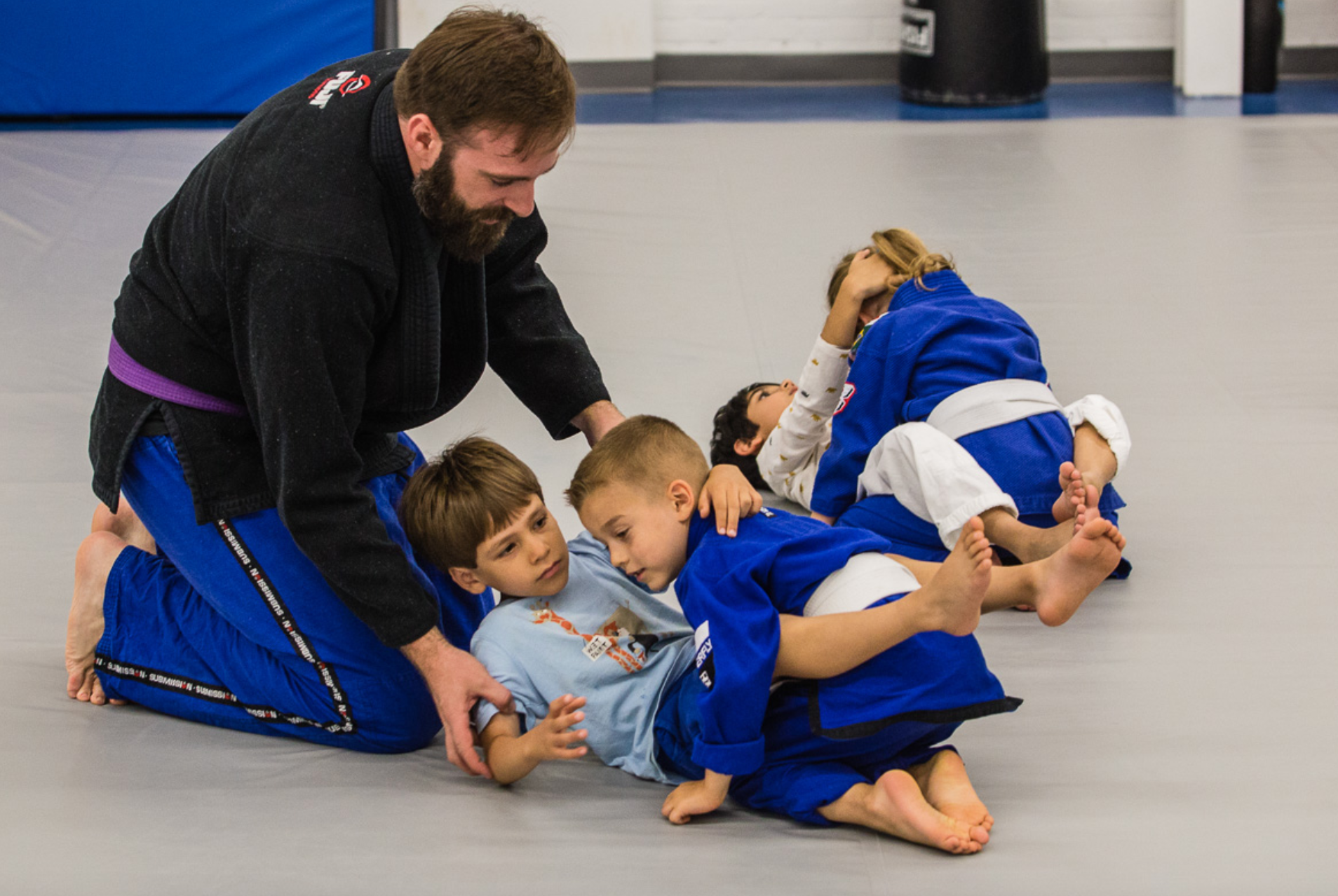
Youth Jiu-Jitsu turns “I want to get better” into a clear plan kids can follow, week after week.
Parents in Hamden often tell us the same thing in different ways: their child wants to improve at something, but staying focused is the hard part. That is exactly why Youth Jiu-Jitsu works so well for goal setting. It takes a big, vague idea like “be more confident” or “listen better” and breaks it into visible steps your child can practice and measure.
In our Youth Jiu-Jitsu in Hamden classes (ages 4–12), kids do not just collect moves. We teach a process: set a target, show up consistently, practice with intention, and adjust when something does not click the first time. That loop matters, because it mirrors how real goals work at school and at home, not just on the mats.
What makes Brazilian Jiu-Jitsu in Hamden especially useful for kids is the built-in structure. There is always a next milestone: a technique that finally feels smooth, a round where your child stays calm, a stripe earned through consistent effort, or a belt promotion that marks long-term growth. Those moments are small, but they stack up into something big.
Why goal setting is easier when progress is visible
A lot of kids struggle with goals because goals can feel imaginary. “Be more disciplined” is abstract. “Get better at math” is broad. In Youth Jiu-Jitsu, we can point to a concrete skill and say, “This is what we are improving today.” Kids feel the difference between guessing and knowing. They feel the difference between panicking and breathing. That kind of feedback is immediate, and it makes motivation much easier to hold onto.
We also like that progress in jiu-jitsu is not only about athletic talent. A child who is not naturally sporty can still win with consistency: showing up, listening, trying again, and keeping control. That is the real lesson for goal achievement. Natural ability is nice, but practice habits are dependable.
Even better, this is not “all or nothing.” If your child has an off day, we do not treat it like failure. We treat it like information. That shift alone helps kids stop quitting when something gets frustrating.
The belt system: a built-in map from short-term wins to long-term achievement
The belt system is one of the clearest goal-setting tools in martial arts, especially for kids. It gives your child an understandable path: fundamentals first, then deeper skills layered over time. In Youth Jiu-Jitsu, belts and stripes are not just rewards, they are mile markers that tell your child, “Your effort is turning into ability.”
For many Hamden families, this is a relief. You do not have to guess whether training is “working.” You can see it. Your child starts remembering details, moving with more balance, and responding with more self-control in live training. Then those changes show up outside the gym too, usually in small ways at first.
The healthiest way to think about belt progress is not rushing to the next color. It is learning how to earn progress: focus, patience, responsibility, and emotional control. When kids connect those traits to a real outcome, they begin to understand goals as something they build, not something adults hand out.
How Youth Jiu-Jitsu teaches the goal-setting process (without making it a lecture)
Kids do not need another speech about discipline. They need a system they can feel working. Our classes are designed so goal setting happens naturally through training: instruction, repetition, feedback, and gradual challenge.
Here is the process your child practices in every class:
1. We show a skill in a clear, age-appropriate way
2. Your child drills it with guidance and correction
3. We add a little resistance, so it becomes real
4. Your child tests it in controlled rounds and learns what holds up
5. We reset, refine, and repeat next class
That cycle looks simple, but it is powerful. It teaches kids that improvement is not a mystery. It is something you can do on purpose. Over time, kids start applying the same idea to school projects, chores, and social challenges. Practice, feedback, adjustment, repeat.
Small wins that matter more than you might expect
When parents think about martial arts goals, they often picture a belt promotion. That is a great long-term marker, but the real magic is in the small wins that happen earlier and more often. These are the moments that teach kids how to stick with something.
In our Youth Jiu-Jitsu in Hamden program, we pay attention to wins like:
• Listening the first time, even when the class is energetic
• Finishing a drill without getting distracted halfway through
• Asking a question instead of shutting down when confused
• Staying calm in a tough position and escaping step by step
• Tapping early and safely rather than panicking or forcing it
• Showing respect to training partners, even after a hard round
Those may sound simple, but for a 6-year-old, “I stayed calm” is a big deal. For a shy 10-year-old, “I partnered up quickly” is real growth. These are measurable, repeatable victories. And they build the confidence kids actually use in daily life.
Confidence through competence, not hype
We care a lot about how confidence is built. Real confidence is not loud. It is steady. It comes from knowing you can handle challenge, and knowing you can keep trying without falling apart.
Youth Jiu-Jitsu builds that kind of confidence because it is honest. If a technique does not work, your child gets immediate feedback. If it does work, your child knows it was earned. That truth is grounding for kids, especially in a world where so much praise can feel vague.
Over time, kids start walking a little taller. They volunteer answers more often. They handle corrections without taking it personally. Parents often notice more self-assurance, but also more self-control, which is the part people forget to talk about.
Emotional control: the hidden goal behind the physical skills
Brazilian Jiu-Jitsu in Hamden is often described as a self-defense martial art, but for kids the deeper value is emotional regulation under pressure. The physical part is important, but the emotional skill is what makes training transfer into real life.
On the mats, kids learn to breathe when things feel hard. They learn how to pause and think. They learn that frustration is not an emergency. That matters for school, sibling conflict, and even bedtime routines. When your child can handle a tough training moment, “this homework is annoying” becomes easier to manage too.
We design training for ages 4–12 with that in mind. We want kids to be strong, but we also want them to be steady. That is why our program emphasizes confidence, self-control, emotional strength, and real-world safety, all at the same time.
Safety and “real-world” skills for beginners and shy kids
A common question we hear from Hamden parents is whether jiu-jitsu is safe for beginners, especially kids who are shy or sensitive. Our answer is yes, because we structure the training to be controlled, age-appropriate, and supervised with clear rules.
Youth Jiu-Jitsu teaches kids to use leverage and positioning rather than aggression. We reinforce tapping, respecting boundaries, and being a good partner. Kids learn that control is the goal, not dominance. That creates a training culture where beginners can settle in without feeling overwhelmed.
From a practical standpoint, jiu-jitsu also supports real-world safety by teaching awareness, posture, balance, and how to protect personal space. It is not about picking fights. It is about helping kids feel less helpless if something uncomfortable happens, and helping them stay calm enough to make good decisions.
What a first class usually feels like (and what you should bring)
Starting something new can be the hardest step for kids, so we keep the first experience straightforward. Most first classes include a warm-up that matches your child’s age, basic movement skills, and an introduction to foundational positions and simple techniques. We focus on learning names, rules, and how to work with a partner safely.
For parents, the vibe is usually the first pleasant surprise. The room is active, but it is not chaotic. Kids get to be kids, but we still hold boundaries. That combination tends to click for families who want structure without harshness.
What to bring is simple: comfortable athletic clothes, a water bottle, and a willingness to learn. If you are not sure about gear, you can check the website for guidance, and we will help you get oriented without making it complicated.
How quickly do kids progress, and how often should they train?
Progress depends on age, attention span, and consistency, but most kids improve fastest when training becomes part of a weekly rhythm. In Youth Jiu-Jitsu, you will usually see early wins within the first few weeks: better listening, improved coordination, and more comfort partnering up. Technical skill takes longer, but that is the point. The long game is where goal setting becomes a real life skill.
As a general rule, consistent attendance beats occasional intensity. One or two classes every week is often enough to build momentum for younger kids. As kids get older, adding another day can help them retain skills and build confidence faster. We can help you choose a schedule that fits school routines and family life in Hamden, because burnout does not help anyone.
If your child hits a plateau, we treat it as normal. Plateaus are where kids learn perseverance. We adjust goals, tighten up fundamentals, and look for one specific thing to improve next. That is a life lesson that will pay off far outside the gym.
Helping your child set jiu-jitsu goals at home (without turning it into homework)
You do not need to run extra drills in your living room to support progress. The most helpful “home goals” are simple and behavior-based, especially for ages 4–12. Think of goals that support consistency and mindset.
A few options that work well for many families:
• Pick one “focus word” for the week, like calm, listen, or try again
• Set an attendance goal, such as showing up on the scheduled days for a month
• Ask your child to teach you one safe movement they learned (just one)
• Celebrate effort milestones like improved attitude, not just stripes or belts
• Use a quick post-class question: “What was one thing you got better at today?”
This keeps the emphasis where it belongs: progress through practice. Over time, kids start setting their own goals, which is the outcome most parents actually want.
What parents in Hamden often notice first
Because our program emphasizes discipline, patience, focus, responsibility, and emotional control, the early changes are often less about flashy techniques and more about daily behavior. Parents regularly report improved attentiveness, respect, and self-assurance. These are not overnight transformations, but they are noticeable patterns.
You might see your child follow directions with less pushback. You might notice fewer big emotional spikes when something goes wrong. You might hear your child say, “I can do it if I practice,” which is basically the goal-setting mindset in one sentence.
And yes, kids also learn real jiu-jitsu. They learn how to move, how to base, how to escape, and how to stay safe with a partner. But the character development is what makes Youth Jiu-Jitsu in Hamden feel like more than just an after-school activity.
Take the Next Step
If you want an activity in Hamden that helps your child build focus, confidence, and follow-through, Youth Jiu-Jitsu is one of the most practical options because it teaches goal setting through action, not talk. Our classes for ages 4–12 are structured around measurable progress, emotional control, and real-world safety, so your child can grow on the mats and bring those habits home.
When you are ready, Soulcraft Martial Arts makes it easy to explore Brazilian Jiu-Jitsu in Hamden with a supportive first experience and a clear path forward. If you check the website and the class schedule, you can choose a time that fits your family and start building momentum one class at a time.
Ready to train? Join a Jiu-Jitsu class at Soulcraft Martial Arts and start building your skills.