
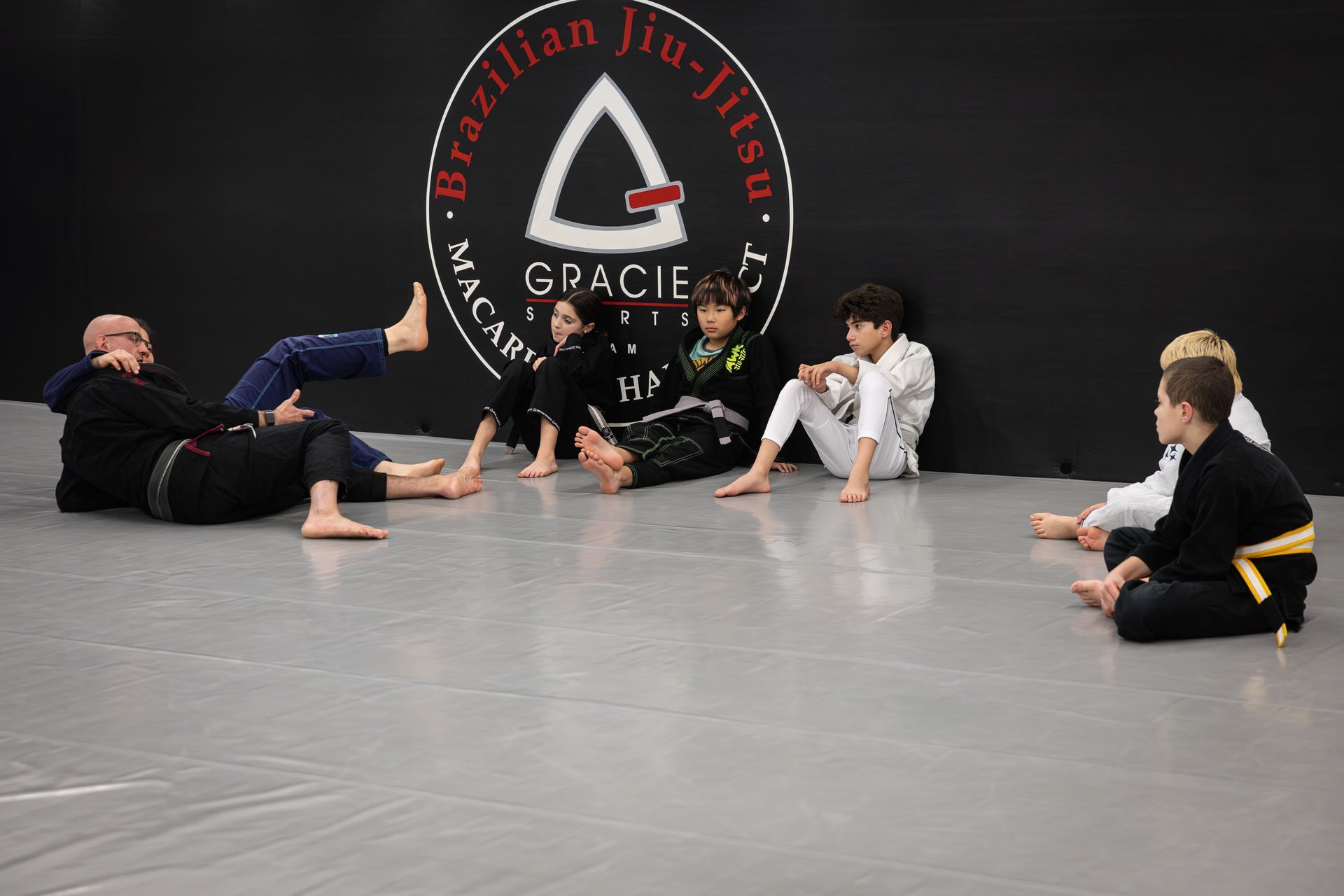
Youth Jiu-Jitsu gives kids a calm, practical way to stay safe while building confidence you can see at home and at school.
If you are searching for Youth Jiu-Jitsu in Hamden, you are probably balancing two things at once: you want your child to feel safer in the world, and you also want an activity that is genuinely good for them. We hear that from parents every week. You are not looking for a fight club. You are looking for a structured, positive place where kids learn skills, burn energy, and leave feeling proud of themselves.
Our Youth Jiu-Jitsu program is built around a simple idea: the best self-defense for kids is the kind that teaches control, awareness, and smart decision-making. Brazilian Jiu-Jitsu is a non-striking martial art, which means we spend our time on positioning, balance, escapes, and controlled holds, not punching and kicking. For most families, that safety-first approach is the whole point.
Hamden families also want something that works year-round. Connecticut weather does its thing, schedules get busy, and screen time has a way of creeping in. Youth Jiu-Jitsu gives you a consistent routine indoors, with goals that keep kids motivated and a training culture that rewards effort, not attitude.
What Youth Jiu-Jitsu actually teaches (and why it matters)
When people hear Jiu-Jitsu, some picture adults rolling hard on the mat. Kids’ classes look different. We teach in steps, using games, drills, and short partner rounds that match your child’s age, size, and experience. The goal is skill-building, not toughness for toughness’ sake.
Here is what we focus on early, because it makes everything else safer and easier:
• How to move with balance and good posture, so kids feel stable instead of clumsy
• How to fall and get back up, so slips and bumps are less scary
• How to create space when someone grabs, crowds, or pins
• How to control someone without hitting, which helps avoid escalation
• How to stay calm under pressure, even when the body wants to panic
Those skills translate in a very real way. A child who learns how to frame, shrimp, and stand up safely is learning more than technique. We are teaching problem-solving and composure. That shows up when a kid gets shoved in a hallway, bumped on a bus, or pulled into a playground disagreement.
Why Brazilian Jiu-Jitsu is a safer self-defense choice for kids
Safety is not a slogan in Youth Jiu-Jitsu. It is the framework. Brazilian Jiu-Jitsu emphasizes leverage and position, so kids learn how to use their bodies efficiently instead of relying on strength. And because it is non-striking, we can teach effective self-defense concepts while keeping intensity appropriate for children.
In practical terms, we are training kids to do three things in the right order:
1. Avoid and de-escalate when possible
2. Escape and create distance when needed
3. Control long enough to get safe, not to “win”
That third point is important. In our culture, control is not about domination. It is about safety. If a child can maintain space, protect their head, and stand up without panicking, that is a huge win. It is also why parents often prefer BJJ compared with striking arts for younger kids: the skills naturally lean toward restraint and getting out.
Youth Jiu-Jitsu in Hamden and the anti-bullying conversation
A lot of parents come in with one big question: Will this help with bullying? Our answer is nuanced, because real life is nuanced. Youth Jiu-Jitsu is not a magic shield, and we never want kids walking around looking for a chance to prove something.
What we can do is give your child tools that change how bullying plays out.
Confidence changes the “target” dynamic
Bullies often look for easy reactions: fear, shutdown, or big emotional spikes. When kids train consistently, posture improves, eye contact improves, and the voice gets steadier. Even shy kids start speaking up. That alone can reduce how often a situation escalates.
Boundaries are teachable
We practice respectful partner work every class. Kids learn how to say “stop,” how to tap, how to reset, and how to follow rules even when they are excited. Those are boundary skills. And yes, those show up in school: “Don’t touch me,” “Back up,” “I’m telling an adult.”
Physical skill is the backstop, not the first step
If de-escalation fails and a child is grabbed, pinned, or held down, BJJ offers a realistic path to escape. That matters because many common school incidents involve pushing, clinching, or someone trying to hold someone else in place. Youth Jiu-Jitsu in Hamden is about preparing for those moments without feeding aggression.
What ages can start, and how we keep classes age-appropriate
Most kids can begin around age 5, and we structure the program so beginners are not thrown into a room where they feel lost. Age and experience matter. Attention spans, coordination, and emotional regulation develop fast between 5 and 14, so we coach differently at each stage.
How we think about age ranges
We generally look at three things when placing a student: age, maturity, and comfort with partner work. A confident 7-year-old with good listening skills may progress quickly, while a brand-new 10-year-old may need extra time to feel comfortable. Both are normal.
In every case, we keep the environment supportive and organized. Your child should know what to do when they walk in: line up, listen, drill, and practice. Predictability is one of the reasons parents love youth martial arts, and we take that seriously.
A realistic first-month roadmap for beginners
Parents appreciate knowing what progress looks like. Here is what a typical first month in Youth Jiu-Jitsu can feel like when your child trains consistently.
1. Week 1: Comfort on the mat
We focus on names, safety rules, basic movement, and making the space feel friendly and predictable.
2. Week 2: Body control and listening
Your child starts learning positions, simple partner drills, and how to match pace with a teammate.
3. Week 3: Simple escapes
We introduce foundational escapes and the idea that getting back to your feet is often the safest option.
4. Week 4: Routine and confidence
Movements feel less awkward, kids participate more, and you usually notice better focus and patience at home.
This is also when many kids start talking about class on the drive home. Not every kid is chatty, but most start to feel ownership: “I learned something real today.”
What you will see your child gain off the mat
Youth Brazilian Jiu-Jitsu is physical, but the long-term value is bigger than fitness. We consistently see growth in skills that help kids in school, sports, and social situations.
Physical benefits that build quietly over time
BJJ naturally improves coordination, balance, flexibility, and strength. The training is full-body and dynamic, so kids develop athleticism without needing to be “good at sports” on day one. If your child is not naturally athletic, that is fine. We build the base step by step.
Focus, discipline, and emotional resilience
Jiu-Jitsu requires attention to detail: where your hands go, how you shift your hips, how you breathe. Kids learn to slow down and think. They also learn how to handle frustration. Nobody hits a perfect technique every time. That is kind of the point. Progress in Youth Jiu-Jitsu comes from showing up, trying again, and being coachable.
Social skills and teamwork
Partner training teaches cooperation in a unique way. Kids learn to take turns, to respect taps, to help each other drill, and to win and lose gracefully. That social practice is real. It is not a lecture. It is lived.
What to expect in your child’s first class
The first day matters. You want your child to feel welcomed, not overwhelmed. A typical first class follows a simple rhythm: warm-up, skill of the day, drilling with a partner, and a short round of controlled practice (often in game format for younger kids).
What to wear
If you already have a gi, bring it. If not, your child can usually start in comfortable athletic clothes, like a T-shirt and shorts or leggings without zippers. We recommend bringing a water bottle and arriving a few minutes early so your child can settle in without rushing.
What if your child is nervous?
That is normal. We meet kids where they are. Some jump in immediately. Others hang back for a class or two and then suddenly click. We would rather move at your child’s pace than force confidence. Real confidence grows from competence, and competence takes repetition.
How often should kids train to see progress?
For most families, two classes per week is the sweet spot. It is frequent enough that kids remember the movements and build momentum, but not so frequent that it becomes stressful. If your schedule only allows once per week, your child can still benefit, especially if consistency is strong. The key is routine.
As your child progresses, you might choose to add an extra class, especially if they enjoy the challenge or want to explore competition later. Youth tournaments are thriving nationwide, with large events drawing thousands of young athletes, which shows how established and supportive the youth pipeline has become. Competition is optional, though. Our priority is development, safety, and enjoyment.
Brazilian Jiu-Jitsu in Hamden as an after-school anchor
We see Youth Jiu-Jitsu in Hamden work best when it becomes part of the weekly rhythm. Kids come in after school with a head full of noise. Class gives them a place to focus on something concrete: movement, rules, teamwork, progress. Many parents tell us the evening goes smoother after training, and that makes sense. Kids burn energy, but they also regulate.
This is also an indoor activity that stays consistent through winter and rainy stretches. You are not scrambling for something to do when the field is closed. The mat is ready, the class has structure, and your child has a community that notices when they improve.
Take the Next Step
If you want your child to learn safe, practical self-defense while building confidence and discipline, our Youth Jiu-Jitsu classes are designed to make that growth feel natural, not forced. We keep training age-appropriate, structured, and focused on control, so kids learn skills that help in real situations without promoting aggression.
When you are ready, Soulcraft Martial Arts is here in Hamden with a welcoming environment, clear coaching, and a program that supports kids on and off the mat. Soulcraft Martial Arts works best when you simply start, stay consistent, and let the small wins add up week by week.
Take what you learned here to the mats by joining a Jiu-Jitsu class at Soulcraft Martial Arts.